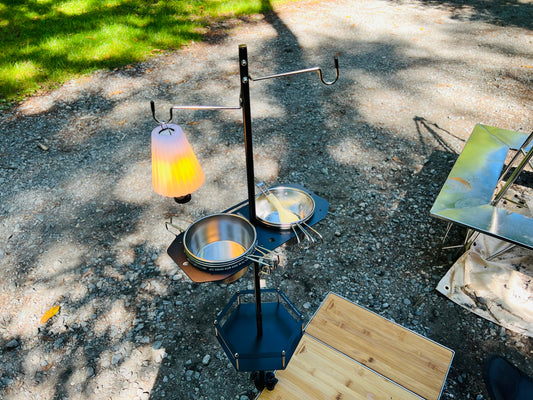

One of the greatest joys of camping is undoubtedly the cooking.
While cooking rice in a mess tin is a staple at campsites, deep-fried foods and dishes like ajillo are also popular.
However, when cooking with oil, the question of how to dispose of the used oil becomes a concern.
This article explains the correct way to dispose of oil used for deep-frying, ajillo, and other dishes.
By learning about proper disposal methods that are environmentally conscious while enjoying camping, you can enjoy outdoor cooking with peace of mind.
- Learn how to dispose of oil.
- You'll find out what fried foods are recommended for camping.
Contents of this article
Deep-fried food is popular in camping cuisine.
Cooking with oil is popular when it comes to camping food.
Fried chicken, tempura, and ajillo are popular camping dishes.
The appeal of fried food lies in its ease of preparation; it can be cooked with almost no prior preparation.
Since you can easily raise the oil temperature sufficiently by starting a fire while camping, you can easily cook at high temperatures.
Additionally, if you bring commercially available frozen foods, you can easily enjoy cooking by simply frying them in oil.
Deep-frying is a popular cooking method that enriches meals while camping, but the downside is that it leaves behind oil.
5 Correct Ways to Dispose of Oil While Camping

When cooking with oil while camping, proper disposal is essential.
Here are five ways to properly dispose of leftover cooking oil.
Wipe it with kitchen paper or newspaper.
For small amounts of oil, it's more efficient to wipe it up and dispose of it.
If it's just the amount of oil used for shallow frying, you can wipe it up with kitchen paper or newspaper and dispose of it as combustible waste without any problems.
If you prepare paper according to the amount of oil you use, cleanup will be easy.
When using a large amount of oil, like when deep-frying, wiping it up with paper can be difficult, but this method is recommended for small amounts.
Put it in an oil pot and use it the next day as well.
Used cooking oil can be stored in an oil pot.
If you plan to cook multiple times while camping, it's a good idea to store the oil in an oil pot and use it for the next meal.
Storing oil in an oil pot minimizes oxidation.
If you've decided to cook with oil, it's a good idea to bring an oil pot from home.
Let it cool, put it in a container, and take it home.
Taking home the cooking oil you used while camping is a good idea.
After it cools down, put it in a container such as a plastic bottle and take it home.
After bringing it home, you'll need to dispose of the oil yourself, but if it's relatively new and not too dirty, you can reuse it for cooking.
Depending on the material of the container, be careful as the container may melt or deform if you don't let the oil cool completely before pouring it in.
Solidify the oil with an oil solidifier and dispose of it as waste.
Using an oil solidifier is a simple way to dispose of it.
If you add it to still-hot oil, the oil will solidify when it cools and become unusable.
If you add the coagulant powder so that it is evenly distributed throughout the oil, it will solidify nicely.
Since solidified oil can be disposed of as combustible waste, another advantage is that you can leave it at the campsite before heading home.
Using a solidifying agent allows you to process large quantities of oil all at once.
Because it solidifies into a gel-like substance, similar to agar, it makes it easy to remove oil from pots and pans used for cooking.
However, it's important to note that the mixture won't solidify properly unless the oil is at the right temperature.

Dispose of it using oil absorbent material.
Oil absorbent material is an oil treatment agent that is used by adding it to cooled oil.
Like oil solidifiers, it can be disposed of as combustible waste after it has absorbed the oil.
The difference from oil solidifiers is that it doesn't solidify the oil itself, but rather adsorbs it onto the material, making it easier to dispose of.
Since the oil temperature is low when using it, I use it when cleaning up after cooking and eating at a campsite, or the next morning.
While it can process less oil than a solidifying agent, an adsorbent is sufficient for processing oil when frying in a small pot.
3 clever ways to dispose of cooking oil while camping

With a little ingenuity, you can dispose of used cooking oil wisely when camping.
Here are some unusual ways to dispose of oil while camping.
Reuse cooking oil
Reusing cooking oil and using it all up can reduce waste.
For example, you can use the leftover oil from making ajillo to make fried rice or pasta, or to fry dumplings.
When deep-frying with a large amount of oil, it can be difficult to use it all up, but if you're cooking with a small amount of oil, you can reuse it and use it all up.
You can either put any leftovers in a container to take home, or dispose of them using a coagulant or adsorbent.
Reusing cooking oil reduces oil waste, making it an environmentally friendly and eco-conscious method.
However, you should also be careful about oxidation and deterioration of the oil, so check its condition and avoid reusing it if there are any changes in smell or color.
Make a candle using oil solidifier and twine.
Another method is to solidify the oil using an oil solidifier and then use it to make candles, adding a touch of color to your camping trip.
If you insert a string into the oil while solidifying it with a coagulant, leaving the end exposed, you can use it as a candle.
The oil is gradually absorbed by the string, allowing it to be completely burned off.
However, some fried foods can have a strong odor, so consideration for those around you is necessary.
This is an ingenious way to make good use of oil and enjoy camping, but be sure to be very careful when handling fire.
Use the paper used to wipe off the oil as fuel for the campfire.
Another method is to absorb a small amount of oil with kitchen paper or similar material and use it as fuel for a campfire instead of throwing it away as combustible waste.
Paper that has absorbed enough oil is highly flammable, making it suitable as kindling for a campfire.
Using it as kindling for a campfire the next day is eco-friendly and saves money, or you can simply throw it into the fire and burn it.
However, the oil used to fry meat contains the fat from the meat, so it may have an unpleasant odor.
It's a good idea to burn a small amount first to check for any odor issues, and if there are no problems, then you can burn a larger quantity.
When burning oil-soaked paper in a campfire, be sure to be considerate of other campers.
Oil disposal methods you should NOT use while camping

When cooking with a lot of oil while camping, there are certain disposal methods that are NOT recommended.
Please keep the following two points in mind and dispose of the oil properly.
Pour it down the drain
When disposing of cooking oil while camping, it is strictly forbidden to pour it down the sink drain.
Pouring oil down the drain will cause it to flow into the sewage system and pollute the environment.
This is an act that should never be done, as it not only pollutes rivers and oceans but also risks disrupting ecosystems.
Also, pouring oil down the drain can cause it to stick to the drainpipe and potentially lead to blockages.
The sinks at campsites are shared facilities, so please use them respectfully and follow proper etiquette.
Dispose of it in nature
Some people might think it's okay to just dump the oil in nature at a campsite.
However, spilling oil into nature is strictly prohibited as it causes environmental damage.
You might think that pouring oil around will solve the problem, but this is a big mistake.
Historically, cooking oil has been thought to be a good fertilizer and was even spread on fields, but it takes several months for oil to become fertilizer.
Spreading oil on soil can cause it to harden, which can degrade the soil quality.
Disposing of oil without considering its impact on the natural environment is a breach of etiquette and an act that leads to environmental destruction, so you should absolutely refrain from doing so.
summary
Enjoying oil-based dishes such as deep-fried foods, tempura, and ajillo is one of the great pleasures of camping.
It adds color to camp meals and enriches the outdoor dining experience.
However, it is very important to consider how to dispose of oil after use.
Disposing of oil directly at a campsite is harmful to the environment, so you should absolutely never do it.
Used cooking oil should be disposed of properly, such as by using a solidifying agent or absorbent before discarding it as waste.
Furthermore, you can make effective use of cooking oil by reusing it and using it up, or by using the paper used to wipe up the oil as fuel for a campfire.
When cooking with oil while camping, as a basic courtesy, try to be environmentally friendly.