
No matter how many layers you wear, winter camping will be cold without a heat source, so consider bringing a stove.
What kinds of stoves are suitable for camping?
Especially during the relaxing time after a meal, you tend to move less, so your body cools down very quickly.
Take preventative measures before your child catches a cold and their family says, "I'm never going again!"
There are three main types of stoves.
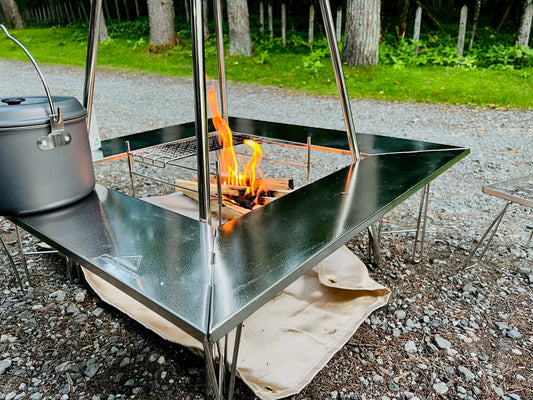
Wood-burning stove
When it comes to warmth in the outdoors, not just during winter camping, a campfire is the way to go.
A wood-burning stove is specifically designed for "providing warmth."
Some winter tents have a design that allows for a chimney to be extended, so it can be used inside the tent.
While lighting and extinguishing them takes some effort, some models allow you to see the flames, creating a fantastic atmosphere.
Kerosene/Kerosene stove
It's easy to light and extinguish, and there's no need for a chimney, making it very convenient to use.
Unless it's a fan heater, you don't need a power source.
Roasting mochi on a stove sounds like a nice idea.
Ceramic heater
In early winter when the cold isn't too severe, and if you have access to an AC power source, a ceramic heater is very effective.
This compact model is best suited for spot use, such as warming your feet.
However, to heat the entire tent, you would need a large heater, which defeats the purpose of its convenience.
Is it okay to leave the heater on all the time?
Always turn it off before going to bed.
I use a carbon monoxide detector when I'm awake or when I'm using it inside the tent.
Carbon monoxide has no odor, and the initial symptom is drowsiness, so it becomes even harder to notice when you've been drinking alcohol.
Wood-burning stoves and kerosene/oil stoves constantly require fresh oxygen, so open the tent's openings diagonally to create airflow.
While ceramic heaters do not pose a risk of carbon monoxide poisoning, they can cause a fire if they tip over and come into contact with you while you sleep, so be sure to turn them off before going to bed.
Choose the right stove for a warm winter camping trip.
Wood-burning stoves create a wonderful atmosphere, kerosene and oil stoves provide ample warmth with minimal effort, and ceramic heaters are highly safe and eliminate the risk of carbon monoxide poisoning.
By choosing the right heating source for the season and temperature—a wood-burning stove for the coldest days, and a ceramic heater for early winter or when spring is in the air—you can enjoy the winter chill while having a comfortable winter camping experience.