
The profound allure of campfires: basics, etiquette, and the ultimate secrets to enjoying the flames.
On a camping night, the warmth and light of a campfire, along with the crackling sound of burning wood, create a special time that allows you to forget the everyday. However, to enjoy a safe and pleasant campfire, preparation, the right knowledge, and respect for nature are essential. This article will explain everything from the basics of campfires to the secrets to enjoying the flames more deeply.
Preparations before starting a bonfire: The first step to connecting with nature
Preparing for a campfire is more than just gathering the necessary equipment. It's a time to connect with nature and appreciate its blessings.
-
How to choose firewood: Firewood comes in two types: hardwood and softwood, each with its own characteristics. Hardwood burns for a long time, making it suitable for those who want to enjoy a campfire for an extended period. Softwood, on the other hand, ignites easily, allowing you to enjoy the rising flames. Beginners should try both to find the firewood that suits their preference.
-
The importance of dry firewood: Branches collected on-site are often not properly dried and can cause smoke. Choosing firewood that has been properly dried will allow you to enjoy a comfortable campfire.
-
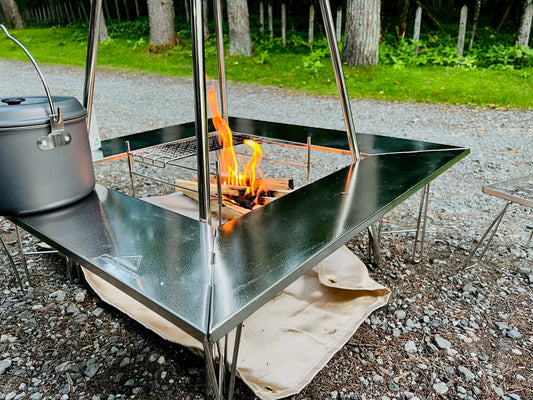
Preparation of safe tools: Gather the necessary equipment, such as a fire pit, fire-resistant sheeting, firelighters, a bellows, and water for extinguishing the fire. In particular, fire-resistant sheeting is essential to prevent damage to the ground and reduce the risk of fire.
Etiquette for safely enjoying a campfire: Remember to show respect for nature.
Campfires are an activity performed in nature. To enjoy them safely, respect for nature and consideration for those around you are essential.
-
Principle of prohibiting open fires: Open fires are prohibited at most campsites. Use a fire pit to minimize damage to the ground.
-
Use of flame-retardant sheets: Placing a flame-retardant sheet under the fire pit will prevent fires caused by sparks.
-
Preparation for extinguishing the fire: Prepare necessary fire-fighting equipment, such as buckets and fire extinguishers, to be ready in case of an emergency.
-
Consideration for others: Please enjoy your campfire quietly at night. Loud noises and smoke can disturb other campers.
-
Cleaning up after a campfire: Make sure to completely extinguish any remaining firewood and ashes and dispose of them properly.
Controlling Fire: The Techniques and Depth of Campfires
Making a bonfire is not simply the act of burning fire. Controlling the flames and bringing out their beauty requires skill and experience.
-
Ignition technology: Use firelighters and gradually transfer the fire from thinner logs to thicker ones. You can stabilize the flame by supplying air with a fire bellows.
-
How to stack firewood: The way you arrange the firewood, such as in a grid pattern or a gabled shape, will change how the fire burns. Try out different arrangements and use them according to the situation.
-
Observing flames: You can understand the state of a fire by observing its color and movement. If the flame is pale blue, it may indicate a lack of oxygen.
-
The fun after the bonfire: The embers left over from a campfire can be used as charcoal. Cooking over charcoal brings out the maximum flavor of the ingredients.
The joy of a campfire: A blissful time to heal mind and body.
A bonfire soothes the mind and body, providing a moment of pure bliss.
-
Healing effect: The flickering flames and the crackling of burning wood have a calming effect on the mind and promote relaxation.
-
A place for communication: Gathering around a campfire and enjoying conversations with family and friends can deepen bonds.
-
A sense of oneness with nature: Through a bonfire, we can appreciate the blessings of nature and feel a sense of unity.
From preparation to cleanup, every aspect of a bonfire is a precious experience. Using this article as a guide, please enjoy the profound charm of bonfires while prioritizing safety.