
Today's playlist. For our 14th installment, we're featuring the swing jazz artist Bud Freeman.
I bought it at Flash Disc Ranch, my favorite record store in Shimokitazawa.
This is a record store I've been going to ever since I first moved to Setagaya. It's popular because of its amazing point card system, which is valid as long as the store is open. Once you collect 50 stamps, you can buy any number of records under 15,000 yen for half price.
Shimokitazawa: A place that makes you want to spontaneously get off the train on your way home on the Odakyu Line.
Whenever I get off at Shimokitazawa, I always stop by here and buy a few records.
I've been doing that for about five years now.
Lawrence "Bud" Freeman (April 13, 1906 – March 15, 1991) was an American jazz musician, bandleader, and composer, best known for playing the tenor saxophone and clarinet.
In 1922, Freeman and his high school friends formed the Austin High School Gang. Freeman played C melody saxophone with band members such as Jimmy McPartland and Frank Teskemacker, but switched to tenor saxophone two years later. The band was influenced by the New Orleans Rhythm Kings and Louis Armstrong. While Armstrong was in King Oliver's Creole Jazz Band, Freeman and McPartland would go to Lincoln Gardens to watch him perform. They were nicknamed "The Alligators."
In 1927, he moved to New York City and worked as a session musician and band member with artists such as Red Nichols, Roger Wolf Kahn, Ben Pollack, and Joe Venuti. One of his most notable performances was his solo on Eddie Condon's 1933 recording "The Eel," which gave Freeman his nickname for his long, snake-like improvisations. Freeman played with the Tommy Dorsey Orchestra (1936–1938) and the Benny Goodman Orchestra in 1938. He later formed the Samma Kam Rode Orchestra (1939–1940). During World War II, he enlisted in the U.S. Army and led the U.S. Army Band in the Aleutian Islands.
After the war, Freeman returned to New York and led his own group. He also collaborated with Buck Clayton, Ruby Braff, Vic Dickinson, and Jo Jones. In 1960, he wrote the book and lyrics for the Broadway musical "Beg, Borrow or Steal," which included the ballad "Zen Is When," later recorded by the Dave Brubeck Quartet on their 1964 album "Jazz Impressions of Japan." He was a member of the World's Greatest Jazz Band in 1969 and 1970. In 1974, he moved to England and continued recording and performing. Freeman stayed on the Isle of Man and was a guest of Isle of Man musician Jim Kane. After returning to Chicago in 1980, he continued to perform well into his 80s.
He wrote two memoirs ("You Don't Look Like a Musician" (1974) and "If You Know of a Better Life, Please Tell Me" (1976)) and an autobiography with Robert Wolff ("Crazeology"). In 1992, Freeman was inducted into the Big Band and Jazz Hall of Fame.
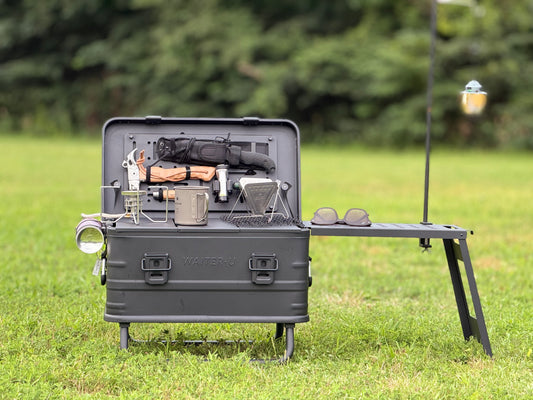
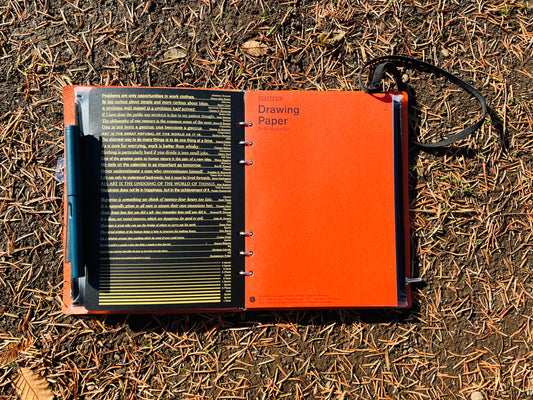
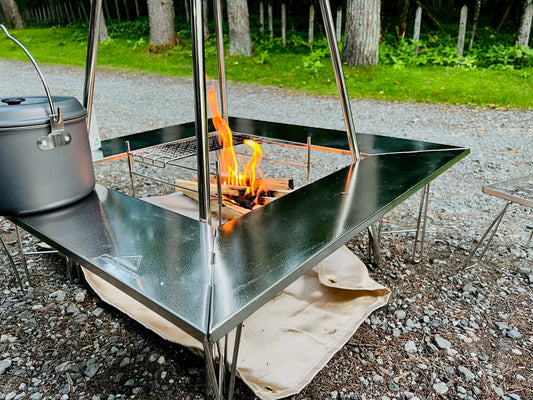
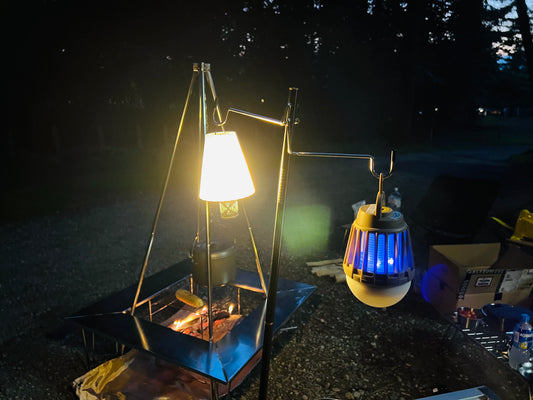
WAITER-U offers not only camping gear, but also a curated selection of music, books, and movies.
I've also created a playlist on Spotify, so please feel free to listen to it in the car on your way to a camping trip.