
Today's playlist. This 29th installment features "Lionel Hampton".
I bought it at Flash Disc Ranch, my favorite record store in Shimokitazawa.
This is a record store I've been going to ever since I first moved to Setagaya. It's popular because of its amazing point card system, which is valid as long as the store is open. Once you collect 50 stamps, you can buy any number of records under 15,000 yen for half price.
Lionel Hampton's brilliant jazz career
Legendary jazz vibraphonist, percussionist, and bandleader
Lionel Leo Hampton (April 20, 1908 – August 31, 2002) was a shining star in the American jazz world. He performed with jazz legends such as Teddy Wilson, Benny Goodman, Buddy Rich, Charlie Parker, Charles Mingus, and Quincy Jones. He was inducted into the Alabama Jazz Hall of Fame in 1992 and received the National Medal of Arts in 1996.
Childhood and the awakening of music
Born in Louisville, Kentucky in 1908, Lionel spent his early childhood with his mother in Birmingham, Alabama. He later moved to Kenosha, Wisconsin, before settling in Chicago in 1916. As a boy, Lionel joined the Bud Billiken Club instead of the Boy Scouts, which he was unable to join due to racial segregation.
In the 1920s, Lionel began taking xylophone lessons from Jimmy Bertrand as a teenager and started playing drums. He was raised as a Catholic and played fife and drums at the Holy Rosalie Academy near Chicago.
Early career and relocation to California
Lionel began his career as a drummer in a newspaper delivery band in Chicago, where he witnessed Louis Armstrong's performances and was greatly influenced by him. He moved to California in 1927 or 1928 and played drums for the Dixieland Blues Blowers. His drumming was characterized by stunts such as twirling and juggling his drumsticks.
During this period, Lionel began practicing the vibraphone. In 1930, Louis Armstrong came to California and hired Lionel for his band, marking the beginning of Lionel's career as a vibraphonist. The vibraphone is an instrument with a metal bar, a sustain pedal, and a resonating tube with an electric fan, and he played a key role in its popularization.
Meeting Benny Goodman
In 1936, when Benny Goodman's orchestra visited Los Angeles, Goodman heard Lionel play and invited him to join his trio. This trio quickly grew into a quartet and became one of the first racially integrated jazz groups to perform in front of audiences.
Lionel Hampton Orchestra
In 1940, Lionel left Goodman and formed his own big band. His 1942 recording of "Flying Home" was a huge hit, and his orchestra gained considerable attention throughout the 1940s and 1950s.
Later activities and social contributions
From 1984 onward, Lionel performed at the University of Idaho's annual jazz festival, and in 1987, the university's music school was named after him. In his later years, he suffered from health problems, but he continued to perform. In 2002, he died of heart failure at the age of 94 at Mount Sinai Hospital in New York City.
Lionel Hampton's Legacy
Many prominent figures attended his funeral to honor his achievements. The procession, which began at the Cotton Club in Harlem, reminded many of his great music and life. Lionel Hampton continues to influence many people through his passion and music.
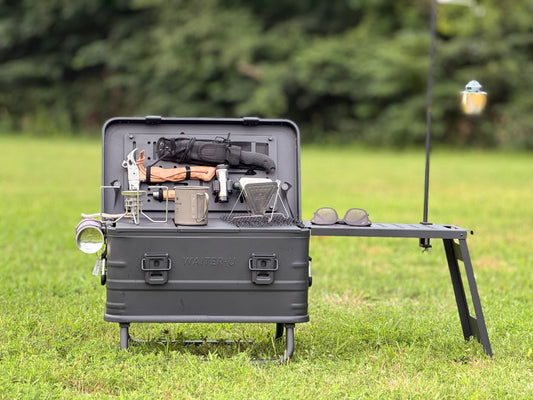
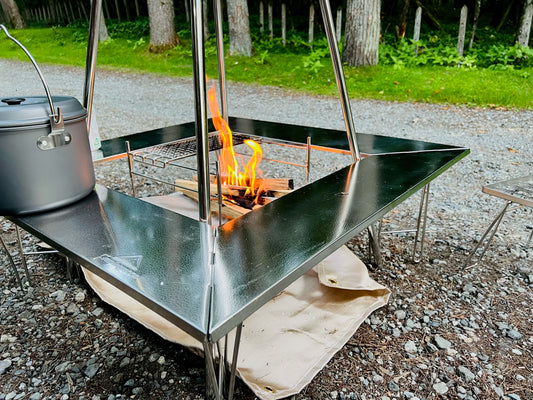
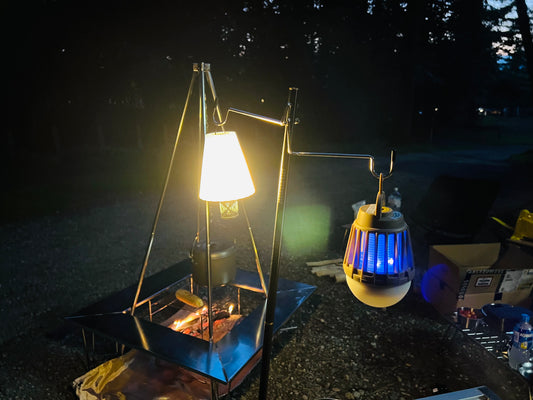
WAITER-U offers not only camping gear, but also a curated selection of music, books, and movies.
I've also created a playlist on Spotify, so please feel free to listen to it in the car on your way to a camping trip.