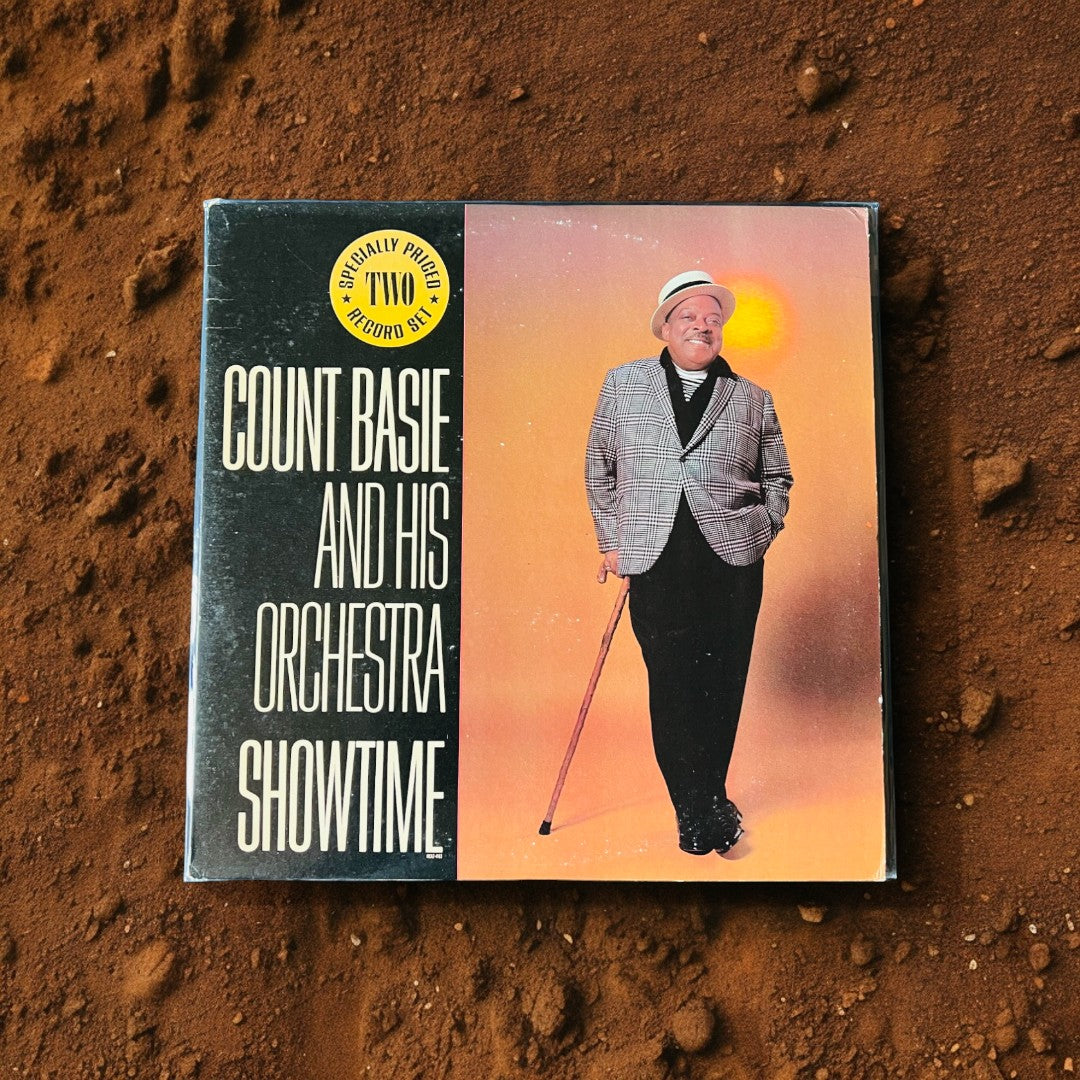
Today's playlist. For the 32nd installment, we're featuring "Count Basie".
I bought it at Flash Disc Ranch, my favorite record store in Shimokitazawa.
This is a record store I've been going to ever since I first moved to Setagaya. It's popular because of its amazing point card system, which is valid as long as the store is open. Once you collect 50 stamps, you can buy any number of records under 15,000 yen for half price.
Count Basie, the Earl of Jazz: A Swing Giant Who Played an Enduring Legend
Count Basie, who graced the golden age of swing jazz and etched his name into history, created music that embodies the essence of jazz, weaving together refined rhythms and harmonies with passionate solo performances. Its appeal continues to captivate music lovers across generations.
Young talent blossoms amidst the hustle and bustle of Kansas City
William James Basie was born in 1904 in the small town of Redbank, New Jersey. He was immersed in music from a young age, honing his piano skills, and in the 1920s, he traveled to Kansas City, the mecca of jazz. After playing with Walter Page's "Blue Devils," he joined the Benny Morten Orchestra. There, he formed a powerful rhythm section later known as the "All-American Rhythm Section," further developing his talent.
"One O'Clock Jump" heralds a new era of swing.
In 1936, Basie formed his own big band, the Count Basie Orchestra. The following year, he released "One O'Clock Jump" on the Decca label, and its simple yet sophisticated sound took the world by storm. The harmonies woven by Lester Young's tenor saxophone, Buck Clayton's trumpet, and Basie's own piano are the very essence of swing jazz. This song remains a shining landmark in jazz history and is still loved by many fans today.
Overcoming hardships, reaching even greater heights
The economic depression following World War II forced many big bands to disband, but Basie did not give up. In 1951, he reformed his big band, welcoming new talents such as Thad Jones and Frank Foster. Through collaborations with up-and-coming arrangers like Neil Hefti and Quincy Jones, he established a new sound known as "New Basie," producing numerous masterpieces such as the albums "Atomic Basie" and "April in Paris."
As a leading figure in the jazz world, he remained active even in his later years.
In the 1960s, Sammy Nestico's arrangements brought a modern sound to the band, bringing a new appeal. Collaborations with vocalists such as Joe Williams and Ella Fitzgerald demonstrated new possibilities for jazz. Furthermore, their collaborative album with Frank Sinatra, "Sinatra Basie," is highly regarded as a groundbreaking work that fused jazz and popular music.
Count Basie's Musical Legacy
Basie sadly passed away in 1984, but his music continues to shine brightly and remains timeless. His innovative sound and unwavering commitment to innovation had a profound influence on subsequent generations of jazz musicians. The numerous masterpieces and albums he left behind teach us about the richness and depth of jazz music.
Count Basie—that's more than just the name of a jazz musician. He's an enduring legend, a symbol of the golden age of swing jazz.
WAITER-U offers not only camping gear, but also a curated selection of music, books, and movies.
I've also created a playlist on Spotify, so please feel free to listen to it in the car on your way to a camping trip.