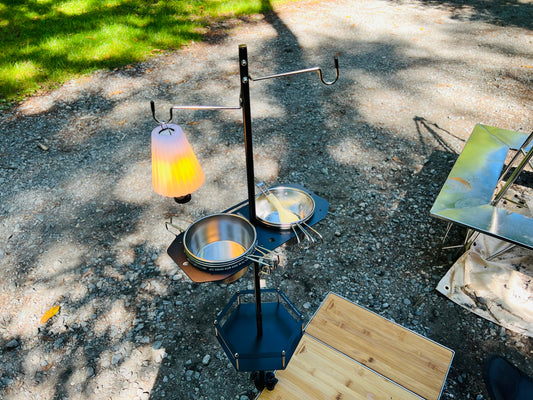
Perfect for when you're solo camping and need one more dish.

When solo camping, you might want one more dish, but you don't want to make something that you can't finish because of the cleanup. In that case, how about some dried fish from Ise-Shima, which is cute in size but authentic?
Mahi-mahi, round herring, Spanish mackerel, yellowtail, and skipjack tuna.
Here's a selection of dried fish from Yamato. Besides yellowtail and bonito, there are some fish that you might not usually hear about, but they're all very fatty and delicious.

Mahi-mahi (or dolphinfish) is a species of fish distributed throughout the Asia-Pacific region, including Japan. Its flesh is white, tender, and fatty, giving it a rich, flavorful taste. It is also commonly used as sashimi and sushi topping.

Round herring (Urume sardine) is a type of sardine that inhabits the waters around Japan. It grows to about 15 cm in length, similar in size to other sardines, but differs in that its scales are finer and smoother. Its flesh is soft and fatty, making it suitable for sashimi, grilled with salt, or simmered dishes. It is especially delicious from spring to early summer, when it is fattier and more flavorful. As it belongs to the sardine family, round herring is also considered a highly nutritious fish, similar to other sardines.

Spanish mackerel (Sagoshi) is a type of tuna that inhabits the Pacific coast. It is characterized by its distinctive bluish-purple body and flesh similar to mackerel. Because it is fatty, it is flavorful and satisfying to eat. It can be eaten in various ways, such as sashimi, grilled, simmered, or as a namasu (vinegared salad).

Yellowtail (buri) is a fish belonging to the amberjack family and inhabits the waters around Japan. Its flesh is white, tender, and fatty, giving it a rich, flavorful taste. It is commonly used as sashimi and sushi topping, and is also well-suited for grilling, simmering, and hot pot dishes.

Skipjack tuna is a fish belonging to the mackerel family and inhabits the waters around Japan. Its flesh is red and fatty, giving it a rich flavor. It can be eaten in various ways, such as sashimi, tataki (seared tuna), tataki rice, grilled dishes, teriyaki, and namasu (vinegared tuna). Skipjack tuna is in season in the autumn, and is considered particularly delicious during this time when it is fattier.
Ise-Shima is a region overflowing with seafood, mythology, and historical charm.
Ise-Shima is a region located in the southeastern part of Mie Prefecture and is one of Japan's most famous tourist destinations. Its main towns are Ise City and Shima City. The region is deeply intertwined with mythology and history, and is home to shrines such as Ise Grand Shrine and its Inner and Outer Shrines. In particular, Ise Grand Shrine is the head shrine of Japan's State Shinto, and attracts many worshippers every year.
In particular, Oharai-machi in Ise City, known as "Oharai-machi," was once a hotbed of gambling and prostitution. To ward off these evil deeds, a custom called "Oharai" was born in the mid-Edo period in what is now Oharai-machi. Oharai is a ritual to purify the body and mind, and it is believed that this later became established as the purification ritual at Ise Grand Shrine.
To tell you another historical story from Ise-Shima, there is a small island called Oishijima near the Gorojima Shrine in Shima City. According to legend, an evil spirit once ruled the island, and the islanders built the Gorojima Shrine to ward it off.
Ise-Shima is famous for its high-end ingredients such as spiny lobster and abalone, but it has also long been a center for dried fish production, and dried fish has been a beloved local food. Therefore, Ise-Shima dried fish is an extremely important part of the local food culture. There are many types of dried fish, including horse mackerel, mackerel, bonito, and saury. These fish are seasoned with salt and then sun-dried or air-dried to bring out their delicious flavor. Because dried fish is fatty and flavorful, it is a popular accompaniment to rice and a favorite snack to go with alcoholic beverages.
"Wicker cords" that have been made for over 55 years
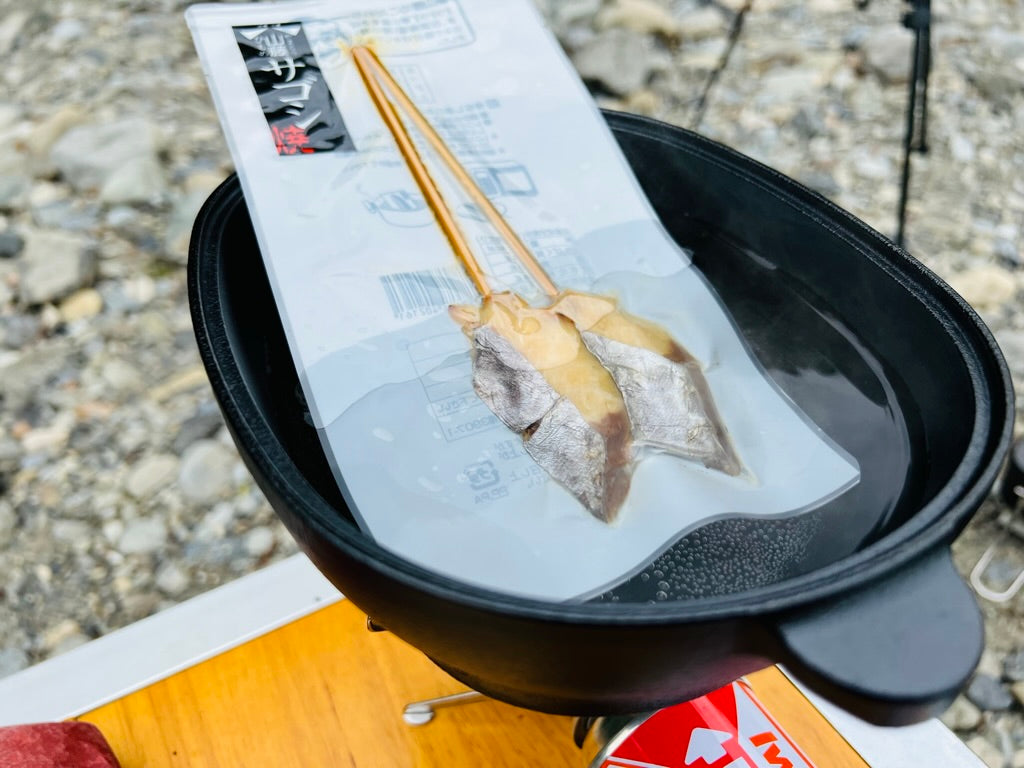
This is a new type of dried fish called "boneless skewered dried fish." It uses fresh fish caught in Ise-Shima, with the bones removed and grilled to perfection. We are also particular about the salt, using "Umi no Sei," a traditional sea salt from Izu Oshima, without any additives. It is pre-cooked and can be eaten straight from the bag. If you want to eat it warm, simply heat the bag in boiling water for about 20 seconds.
Yamato's dried fish is made using authentic methods: natural ingredients, hand-opening, and sun-drying. Yet, it's finished as an appealing skewer of dried fish that can be easily eaten with one hand.
We are committed to authentic methods for producing dried fish, including "natural, hand-filleted, and sun-dried" products, and have been engaged in dried fish manufacturing and wholesale, as well as fresh and live fish wholesale, for over 55 years. Our head office and factory are located in Minamiise Town, and we use fish landed at Minamiise Fishing Port to produce our dried fish.
Camping usually involves going to mountainous areas, right?
Enjoying seafood while soaking up the forest – I hope this makes your solo camping trip a wonderful one.